San Tan Valley Artificial Turf Pros
Desert-Adapted Turf Installs in San Tan Valley, AZ
Desert-adapted turf installs in San Tan Valley, AZ with heat-resistant fibers and reflective infill. Free estimates.
- 15+ Years local experience
- 500+ Projects completed
- Licensed & Insured
Serving San Tan Valley and nearby communities.
Standard turf bought off a generic online listing wasn't built for Pinal County summers. San Tan Valley Artificial Turf Pros installs desert-adapted turf systems, specific fiber types, reflective infill, and base materials chosen to keep the surface walkable when temperatures sit above 110°F for weeks at a stretch.
This matters more in San Tan Valley than most places because so many yards here are brand-new raw-dirt lots. There's no old lawn shading the soil, no established landscaping breaking up direct sun. The base and turf choice have to handle full exposure from day one, and that's the gap this service fills.
What's included
What's Included with Desert-Adapted Turf Installs
Typically included: heat-resistant turf fibers, reflective infill blend, drought-tolerant base layer, UV-protected backing, expansion-gap seaming. Optional: cooling infill upgrade for play or pet zones, shade-sail consultation for extreme-exposure areas. Customer prep: mark any irrigation lines or buried utilities before grading begins.
Want a clearer scope?
Get a Free EstimateHow it works
How Our Desert-Adapted Turf Installs Process Works
 Step 1
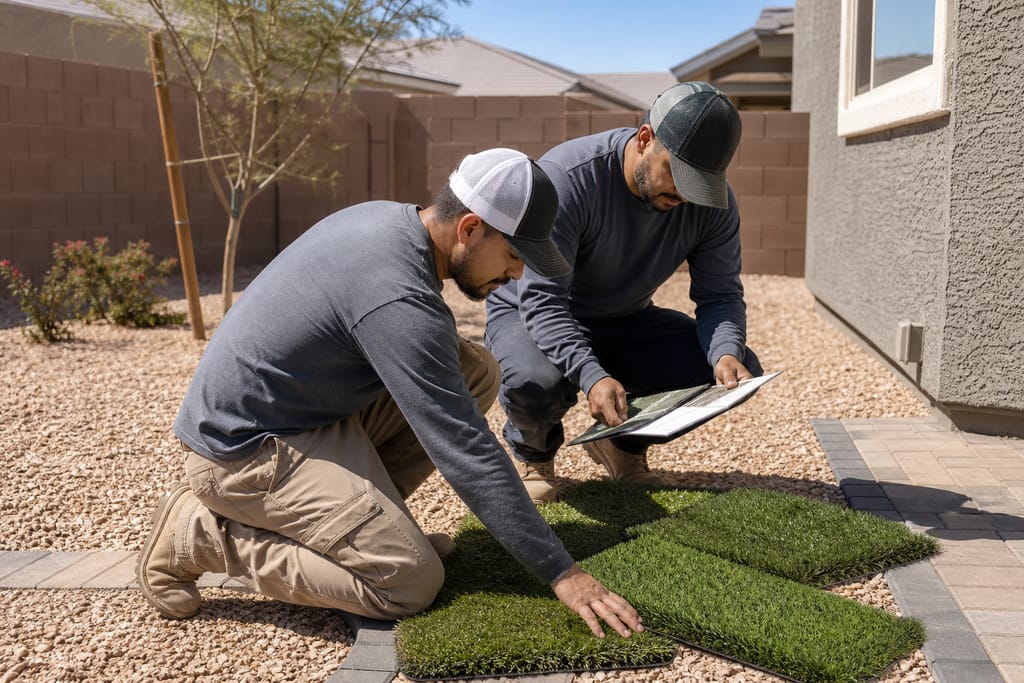
Heat tolerance planning
Turf products are selected based on resistance to high heat and sun exposure.
 Step 2
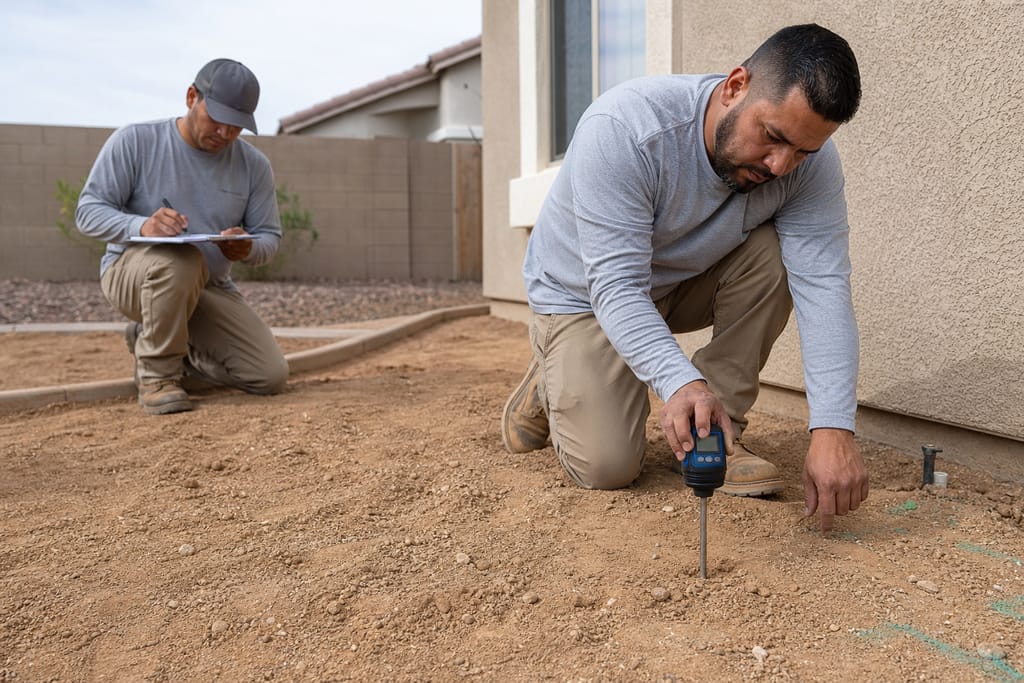
Soil moisture testing
Existing soil conditions are tested to plan drainage solutions.
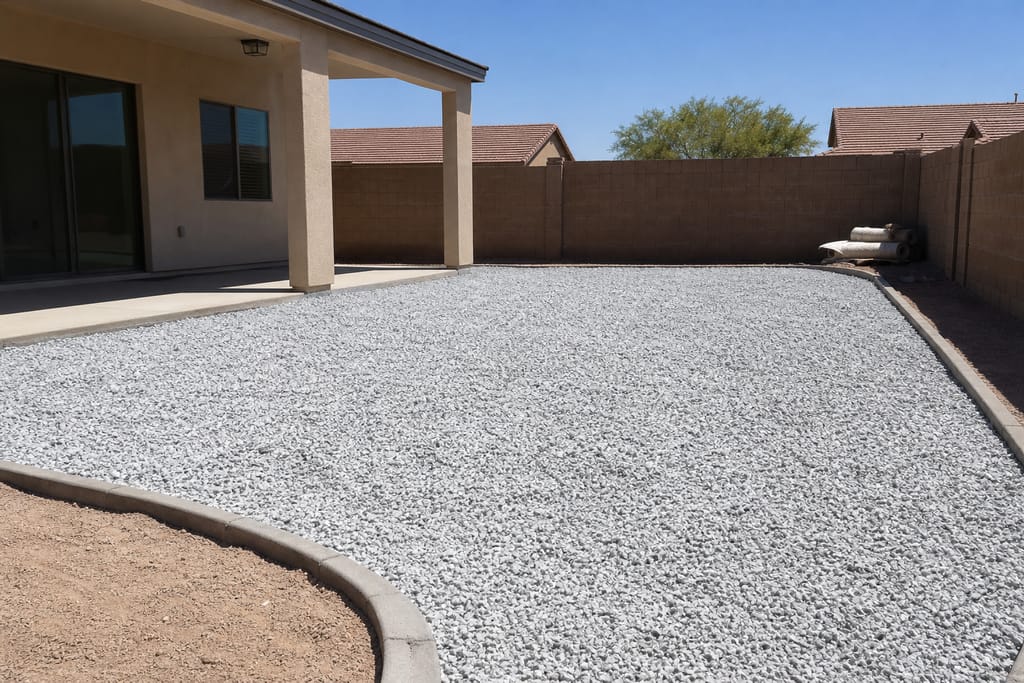 Step 3
Reflective base prep
Base materials are chosen to reduce heat retention under the turf.
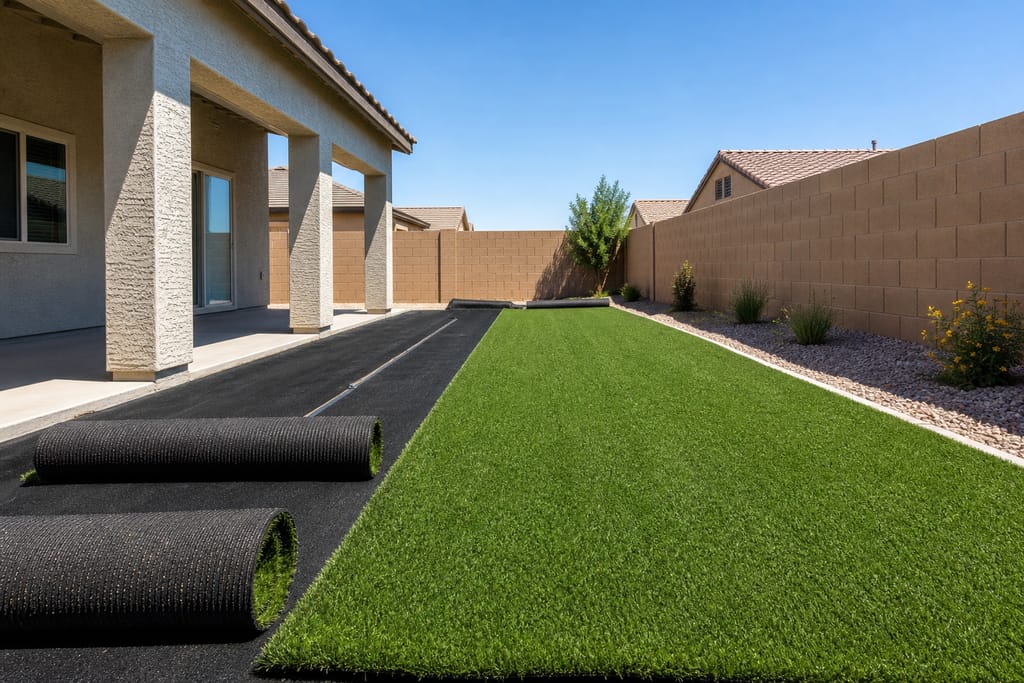 Step 4
Heat-resistant turf laying
Specialized desert turf fibers are installed to handle extreme temperatures.
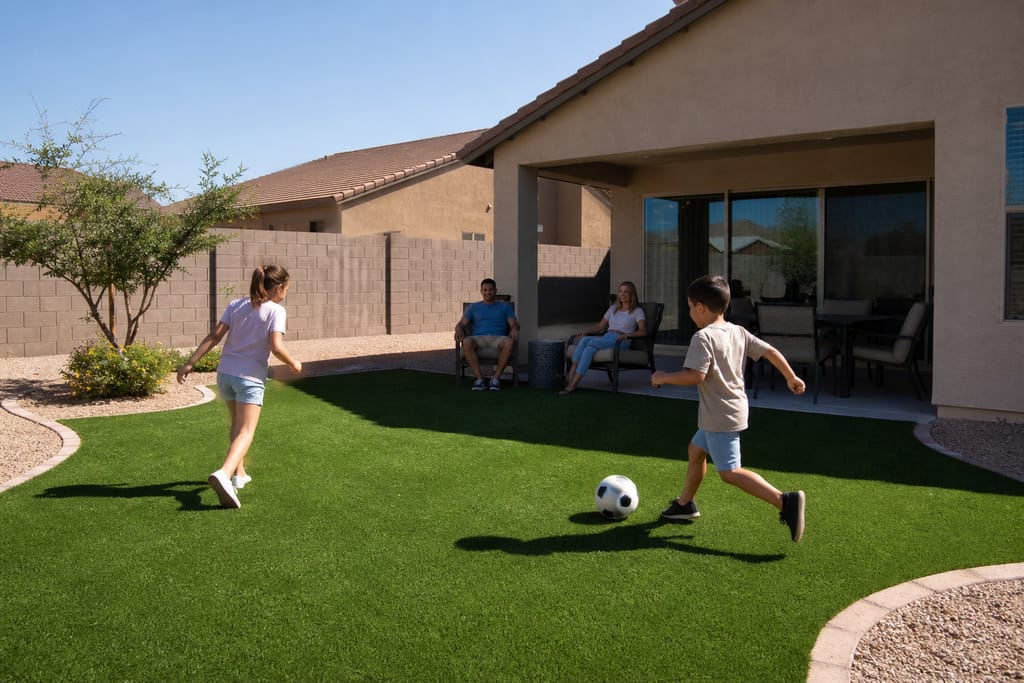 Step 5
Expansion gap allowance
Small seam gaps are built in to handle material expansion in heat.
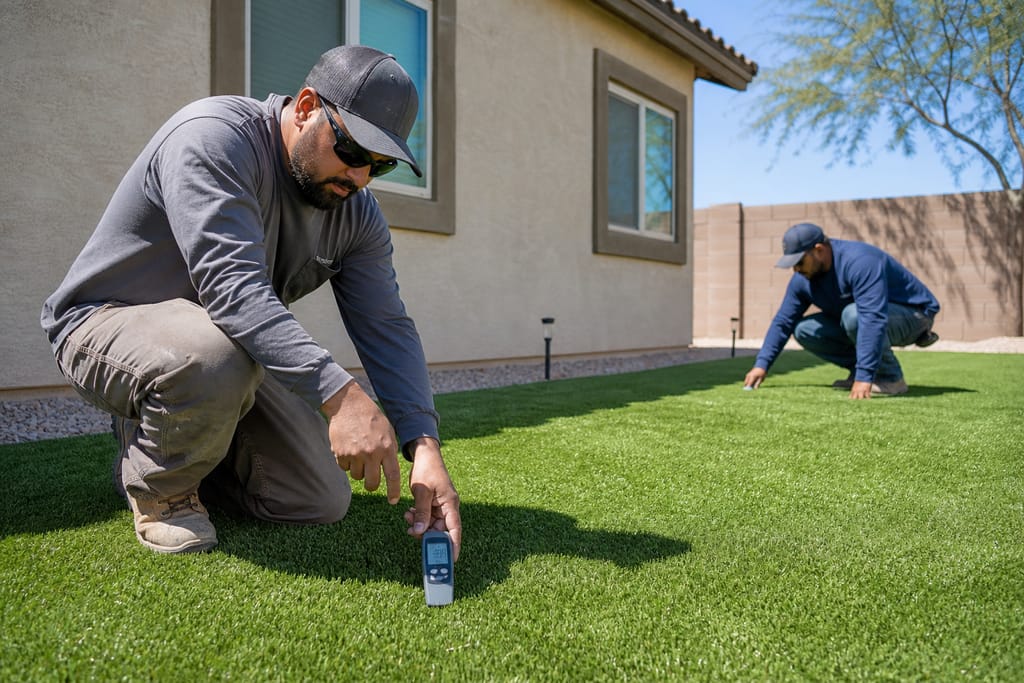 Step 6
Surface cooling check
The finished surface is tested for temperature performance in direct sun.
Materials
Materials and Methods for Desert-Adapted Turf Installs
Every material here is chosen specifically to handle long stretches of triple-digit heat without warping, fading, or burning bare feet.
Heat-resistant turf fibers
Fibers engineered to resist melting under direct desert sun hold their color and shape through a full San Tan Valley summer.
Reflective infill blend
Infill designed to reflect heat instead of absorbing it keeps surface temperatures lower on exposed raw-dirt lots.
Drought-tolerant base layer
Base material selected for stability in the area's dry, low-moisture soil conditions resists settling over time.
UV-protected backing
Backing treated with UV stabilizers prevents cracking after repeated exposure to full desert sun.
Thermal break seams
A seaming technique that accounts for material expansion in heat keeps seams from buckling.
Sand-based filler
Sand filler provides stability while letting heat dissipate rather than trapping it in the fibers.
Questions on materials?
Get a Free EstimateTimeline
How Long Does a Desert-Adapted Turf Install Take?
A standard desert-adapted install runs similar to a standard turf job, with extra attention at the base and infill stages.
- 01
Consult and material selection
same day - 02
Base grading and compaction
1 day - 03
Turf placement with expansion seams
1 day - 04
Infill and surface cooling test
same day
Need a schedule that fits?
Get a Free EstimateCost
What does a Desert-Adapted Turf Install cost in San Tan Valley?
Cost depends on square footage and which heat-reduction upgrades you choose for infill and backing.
| Project type | Typical range | What’s included |
|---|---|---|
| Standard heat-resistant install | $8–$11 | per sq ft, UV-protected backing and heat-resistant fibers. |
| Reflective infill upgrade | $1–$2 | per sq ft added, reduces surface temperature in high-exposure areas. |
| Full desert-package install | $11–$14 | per sq ft, drought-tolerant base plus reflective infill for raw-dirt lots. |
These are typical local ballparks — final cost depends on scope, materials, and site conditions. A free estimate gives you an accurate, itemized number for your home.
Want a number for your home?
Get a Free EstimateNext step
Request a free estimate to get an exact number for your yard.
DIY vs pro
DIY vs Hiring a Pro for Desert-Adapted Turf Installs
| DIY | Hire a Pro |
|---|---|
| A small shaded patch with standard turf kits can get by without specialized heat materials. | Matching fiber type and infill to actual sun exposure takes experience most homeowners don't have on a first install. |
| Risk: picking the wrong infill is the single most common mistake, standard silica sand gets hot enough to burn bare feet by midday. | A pro sets expansion gaps correctly so seams don't buckle after repeated heat cycles. |
Not sure DIY vs pro?
Get a Free EstimateFAQs
Desert-Adapted Turf Installs FAQs
What is the best artificial grass for hot climates like Arizona?
UV-stabilized polyethylene yarn paired with a reflective or cooling infill performs best. Standard turf without those features absorbs heat and can become too hot to walk on barefoot during summer afternoons.
Does desert-adapted turf stay cooler than regular turf?
Reflective infill and lighter-colored fiber blends reduce surface temperature compared to standard turf and dark infill, though no turf stays cool in direct July sun.
How long does desert-adapted turf last in direct sun?
With UV-stabilized fiber and proper base prep, turf typically holds its color and structure for many years of Arizona sun exposure, though exact lifespan depends on traffic and maintenance.
Is desert-adapted turf more expensive than standard turf?
It runs somewhat higher per square foot due to the upgraded infill and UV-rated backing, but it holds up longer under San Tan Valley's heat than standard turf.
Can I upgrade my existing turf to desert-adapted materials?
In some cases infill can be swapped without a full tear-out, but fiber and backing upgrades typically require reinstalling the turf itself.
Before & after
Before and After Desert-Adapted Turf Installs
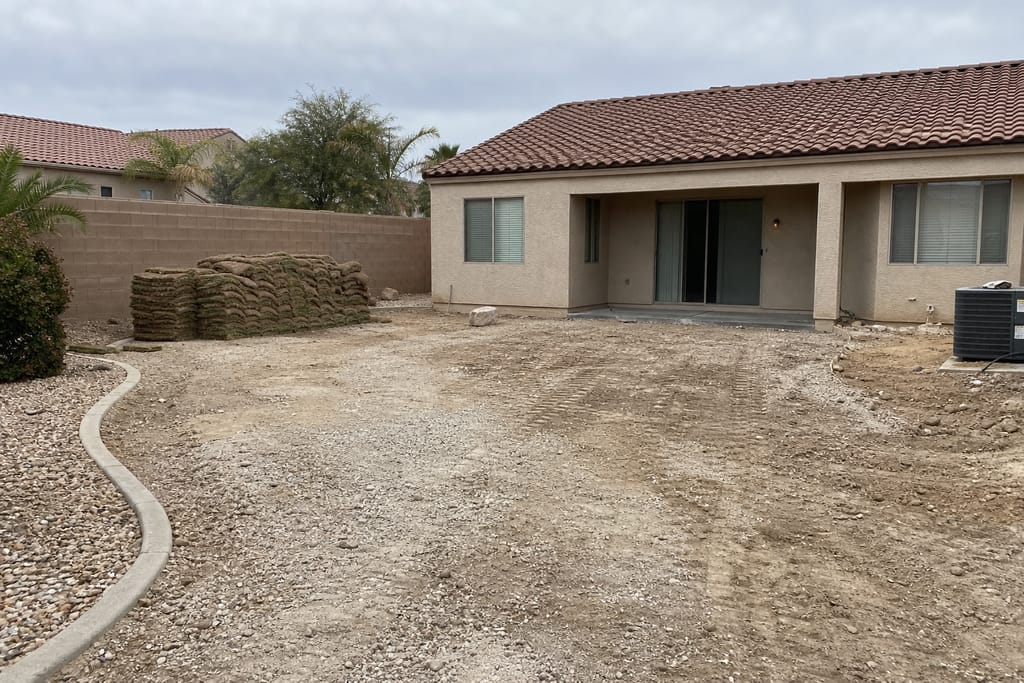
Before 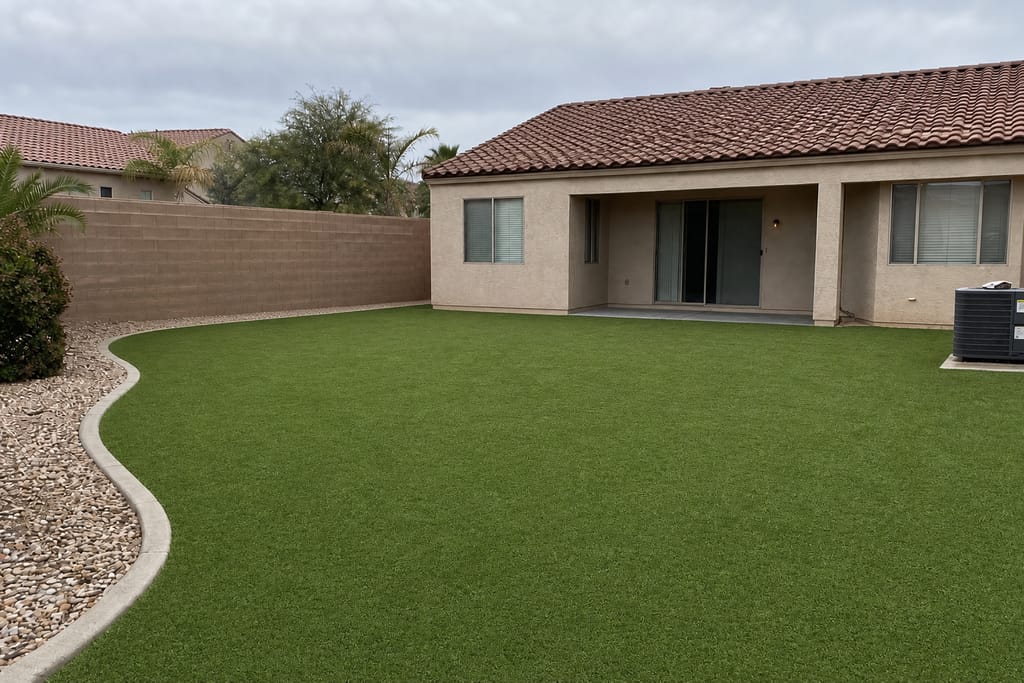
After
More services
Other Artificial Turf services
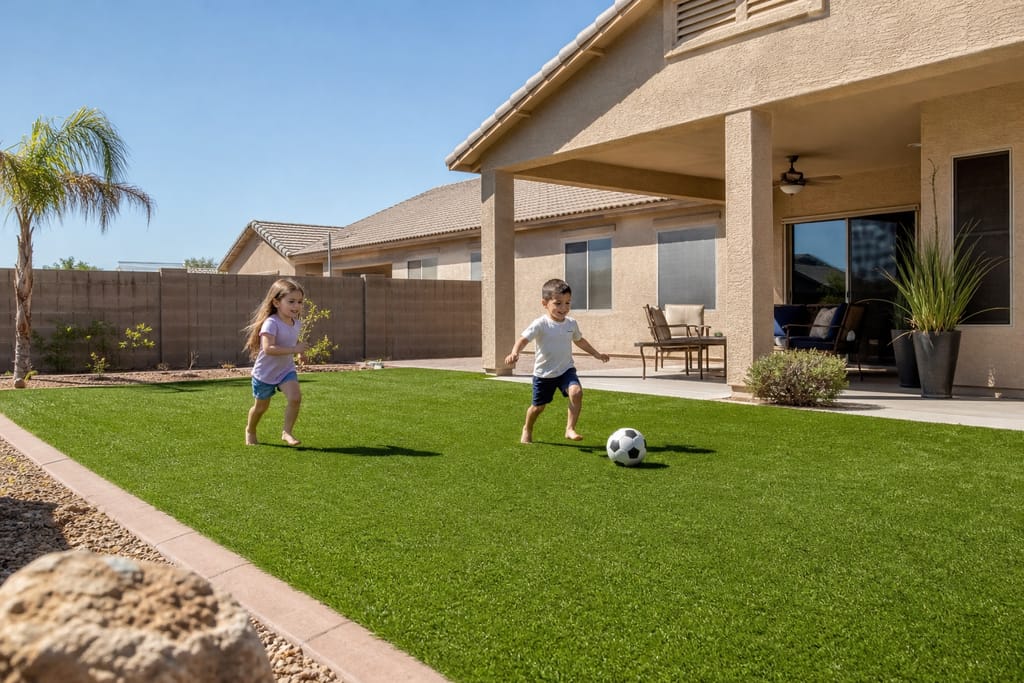
Artificial Turf Installation
Artificial turf installation in San Tan Valley, AZ with heat-rated yarn, proper base prep, and free estimates for raw lots or old lawns.
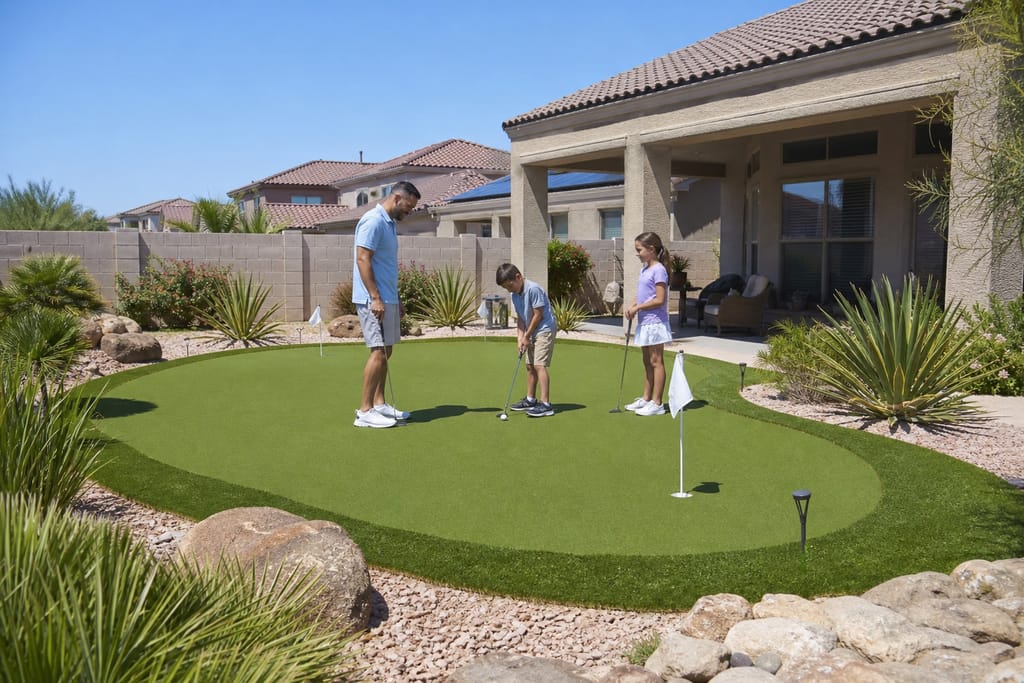
Putting Green Installation
Custom backyard putting green installation in San Tan Valley, AZ with contoured bases and speed-rated turf. Free estimates, no obligation.
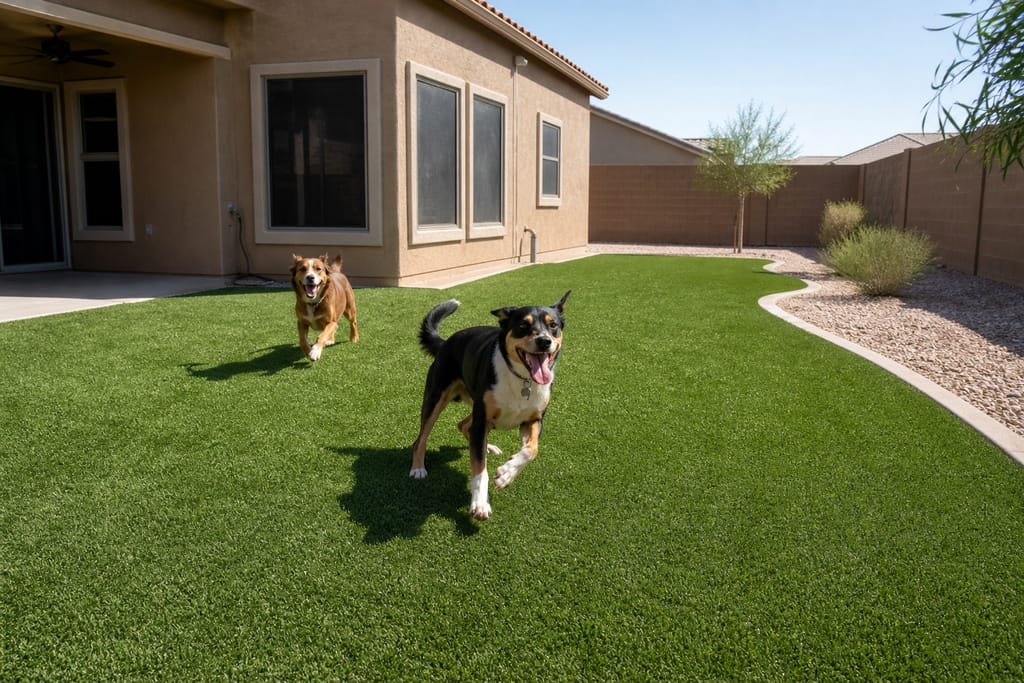
Pet Turf Installation
Pet turf installation in San Tan Valley, AZ with odor-control infill, drainage backing, and durable fibers. Free estimates.
Ask about Desert-Adapted Turf Installs
Tell us about the project and how to reach you.